The Rainbow Cockatiel and the Nature of the Emerald Mutation
The Rainbow Cockatiel and the Nature of the Emerald Mutation
________________________________________
Terry Martin's Perspective on the Emerald Mutation
The primary reason Terry Martin did not classify the Emerald mutation as a dilution mutation in his book Cockatiels and Their Mutations as Pet & Aviary Birds lies in his specific definition of dilution mutations. According to Martin, dilution mutations are characterized by their exclusive effect on melanin transport from the follicle into the developing feather, without altering the coloration of soft tissues. Under this definition, the eyes, beak, and feet retain their normal pigmentation in dilution mutants.
Martin supported his position by observing that every photograph he obtained of the American Emerald clearly demonstrated reduced melanin pigmentation in these soft tissue areas, appearing either pale flesh-colored or lightly pigmented. This observation formed the basis of his argument against classifying Emerald as a dilution mutation.
________________________________________
The Changing Evidence Over Time
However, after many decades of avicultural practice and documentation, numerous photographs of normal grey cockatiels now show lighter soft tissues. This phenomenon may result from selective breeding practices or may occur when birds are split to different mutations, carrying them as recessive traits without expressing them visually.
Conversely, the majority of Emerald birds exhibit dark beaks, feet, nails, and eyes, identical to wild-type coloration, regardless of whether they are combined with the Single Factor Dominant Silver mutation or not. Given that the original basis for excluding Emerald from the dilution category has become invalid, and considering that this mutation follows an autosomal recessive inheritance pattern, produces the same mechanism of melanin reduction, displays multiple alleles, and shows irregular pigment deposition in feathers—a legitimate question arises: why should we hesitate to acknowledge that the Emerald, Olive, or Suffused mutations are caused by a dilute gene, until proven otherwise?
________________________________________
Historical Background of the Emerald Mutation
The documented history of the Emerald cockatiel appears in the American National Cockatiel Society's Journal of 1998. Margie Mason of Texas initiated work with this mutation during the 1980s. The breeders who first discovered the mutation in their aviary were Norma and John Ludwig, who subsequently invited Margie to collaborate on developing the mutation.
The initial breeding pair consisted of a normal grey cock mated to a normal grey hen, reportedly siblings. This pairing produced three offspring, one of which visually expressed the Emerald mutation. The second clutch yielded identical results, confirming the heritable nature of the trait.
________________________________________
The Optical Illusion Behind the Emerald Coloration
The wild-type cockatiel fundamentally possesses a muted to double factor grey-green genetic background, which significantly influences the spongy layer of the feather—the cloudy structural layer responsible for creating constructive interference. This interference produces the blue coloration observed in parrots generally. When yellow psittacin pigments are present alongside this structural blue, the resulting visual effect is the familiar green feather coloration typical of parrots, with blue appearing in the absence of yellow pigments.
In cockatiels specifically, the blue gene manifests as white coloration, producing the white-faced varieties. It is important to recognize that cockatiels, like all modern Cacatuidae (cockatoos), lack the structural coloration mechanisms that enable true green or blue feathers. This fundamental limitation distinguishes them from other parrot species that possess such structural colors.
________________________________________
The Mechanism of the Emerald Mutation
The Emerald mutation functions by substantially reducing melanin pigmentation throughout the plumage. This significant reduction in melanin allows any yellow pigmentation present in the feathers to become highly visible, particularly in strains carrying the Yellow Suffusion trait, which may appear intensely yellow as a result.
The combination of yellow pigmentation with residual melanin creates an optical effect that some breeders interpret as olive-green coloration, giving rise to the alternative names Emerald and Olive. However, it must be clearly understood that these birds never produce genuine structural green coloration, as all cockatiels are inherently grey-green in their genetic makeup. Furthermore, this coloration has no relationship to the true Dark Factor gene, which produces olive coloration in green-based parrot species through an entirely different mechanism.
________________________________________
The Dilute Mutation and Its Effect on Melanin Disposition
Inte Onsman conducted microscopic examinations of feather and eye tissues from individuals carrying the dil-locus, the autosomal recessive pigment-diluting mutation. His findings established this mutation as an exemplary case study for understanding pigment dilution phenomena.
Pigment dilution can arise through multiple mechanisms, including reduction in the total number of melanocytes, decreased melanosome production per melanocyte, deformed melanosomes, or impaired pigment dispersion. Melanocytes function as specialized cells that produce melanin granules known as melanosomes, which are transferred through dendrites—cytoplasmic extensions—to keratinocytes within developing feathers.
Dilute mutations primarily induce a quantitative reduction in melanin pigmentation rather than altering the physical or chemical properties of melanin itself. In budgerigars carrying the Dilute mutation, the principal defect involves poorly developed or entirely absent melanocyte dendrites. Because these dendritic structures are defective, the melanosomes produced cannot be efficiently transferred to feather keratinocytes, causing them to accumulate within the melanocyte instead.
This accumulation causes the melanocyte to swell, potentially leading to cellular damage or rupture. The resulting irregular pigment deposition in the feather likely explains the pale patchy spots frequently observed on the backs of cockatiel emerald birds.
________________________________________
Quantitative Differences in Melanin Reduction
Quantitative analysis reveals that melanosome content in feather barbules is reduced by approximately 80% in Dilute budgerigars (Dil), compared to approximately 50% in Greywings (Gw). This substantial difference accounts for the distinct phenotypic expressions between these Allels.
________________________________________
The Formation and Impact of Macro-Melanosomes
In dilute wing covert feathers, pigment clusters and abundant macro-melanosomes are observed. These structures, referred to in contemporary scientific literature as "melanin macro-globules," develop during the obstruction of normal pigment dispersion. These giant pigment granules can reach sizes up to 500 times larger than normal melanosomes and may occasionally fill the entire medulla of the feather. The presence of these macro-melanosomes is the primary factor preventing clearwings from exhibiting truly clear wings (Cw).
________________________________________
Variation in Color Intensity Among Breeders
The variation in color intensity observed by Emerald cockatiel breeders across Dark, Medium, and Light shades—which often presents interpretive challenges—most likely results from different genetic combinations involving one or two of the multiple dilute alleles present in the population. These allelic combinations interact to produce the graded spectrum of coloration observed.
________________________________________
Anatomical Differences in Cheek Patches
It is noteworthy that the cheek patches of adult male cockatiels differ fundamentally from those of budgerigars. In cockatiels, the cheek patches lack both eumelanin pigment and structural coloration, whereas in budgerigars, they lack psittacin but contain eumelanin and structural color elements. This anatomical distinction reflects the different evolutionary and genetic pathways underlying coloration in these two species.
Multiple Allele Series of the Dil-Locus
The dil-locus in cockatiels exhibits a multiple allele series, producing a spectrum of phenotypes that vary in their degree of melanin dilution. Understanding this allelic series is essential for comprehending how different mutations interact and express themselves in breeding populations.
________________________________________
Phenotypic Expressions of the Dil-Locus
The wild-type phenotype, designated as dil+/dil+, produces the normal grey coloration characteristic of wild cockatiels. This represents the baseline from which all dilute mutations diverge.
The FBC Greywing, which presents as a medium tune, results from the interaction between two distinct alleles: dil gw and dil cw. This is the only phenotype in the series that arises from a heterozygous combination of two different dilute alleles, rather than from homozygosity.
The Clearwing phenotype, represented by dil cw/dil cw, exhibits a light tune, indicating substantial melanin reduction. Similarly, the Dilute phenotype, designated dil/dil, also produces a light tune but through a different allelic combination.
The Greywing phenotype, expressed as dil gw/dil gw, displays a dark tune, reflecting a more moderate degree of melanin dilution compared to Clearwing or Dilute.
________________________________________
Genotypic Combinations and Their Expressions
The genotypic combinations at the dil-locus produce specific phenotypic outcomes as follows:
When an individual carries the dil gw allele paired with the dil cw allele (dil gw/dil cw), the resulting phenotype is the FBC Greywing, characterized by an intermediate level of melanin reduction.
The combination of dil gw with dil (dil gw/dil) produces a Greywing phenotype that is also split to Dilute, meaning the individual carries the Dilute allele recessively without expressing it visually.
The homozygous Greywing genotype (dil gw/dil gw) produces the full Greywing phenotype with its characteristic dark tune coloration.
The homozygous Clearwing genotype (dil cw/dil cw) results in the Clearwing phenotype, exhibiting the light tune with significant pigment reduction.
When Clearwing is combined with Dilute as a heterozygous pairing (dil cw/dil), the phenotype remains Clearwing, but the individual carries the Dilute allele as a recessive trait.
Finally, the homozygous Dilute genotype (dil/dil) produces the full Dilute phenotype, also classified as a light tune.
________________________________________
Order of Dominance Among Dil-Locus Alleles
The allelic series at the dil-locus follows a specific hierarchy of dominance. The wild-type allele dil+ is completely dominant over all other alleles in the series. Following dil+, the dil gw and dil cw alleles exhibit a relationship of incomplete dominance or codominance, as evidenced by the intermediate FBC Greywing phenotype produced by their heterozygous combination. Both dil gw and dil cw are dominant to the dil allele, which is the most recessive in the series.
This dominance hierarchy can be summarized as: dil+ demonstrates complete dominance over all other alleles, while dil gw and dil cw show equivalent dominance to each other but are both dominant over dil, with dil being fully recessive to all other alleles.
________________________________________
Genetic Equivalence of the Emerald Mutation
Based on the allelic series and inheritance patterns described, it is reasonable to consider that the Emerald mutation in cockatiels is genetically equivalent to the Australian Pastel Silver mutation. This equivalence should be confirmed through test breeding programs designed to establish genetic relationships definitively.
Furthermore, the Emerald mutation appears to be genetically analogous to the corresponding mutation in Budgerigars, sharing similar allelic relationships and the same autosomal recessive mode of inheritance. This genetic parallelism suggests that the underlying mechanisms of pigment dilution are conserved across these species.
________________________________________
Implications for Opaline and Related Mutations
Given this genetic framework, any Opaline individual that falls within the Greywing–Clearwing range of melanin dilution and demonstrates approximately 50% reduction in psittacin pigmentation—such as the Pastel Face (Aqua) mutation—could be considered genetically equivalent to a Rainbow Budgerigar. This equivalence applies whether the individual is in the homozygous state or combined with the Blue mutation. Such parallels highlight the shared genetic principles governing pigmentation across different parrot species.
________________________________________
The Commercial Deviation from the Emerald's True Purpose
Regrettably, for purely commercial reasons, most breeders have concentrated their efforts on producing Emerald Whiteface and Emerald Creamface combinations. In pursuing these specific visual combinations, they have, unfortunately, stripped this beautiful mutation of much of its original meaning and the purpose behind its name. The focus on commercial appeal has overshadowed the unique characteristics that originally defined this mutation.
________________________________________
A Call for Dedicated Preservation and Restoration
What is urgently called for is a devoted circle of enthusiasts and dedicated breeders who will champion the ongoing development of this mutation in birds adorned with orange cheeks. These committed individuals must exercise meticulous selection during breeding programs to favour those individuals whose deep yellow hues blaze with vivid, sunlit brilliance. Such careful selection would ensure that the most desirable traits are preserved and enhanced.
This steadfast dedication would serve to restore the mutation to its true essence and original intent, reconnecting it with the vision that first inspired its development. In doing so, it would bestow upon every admirer of this extraordinary bird that subtle, enchanting greenish sheen across its plumage—the very quality that first lent the Emerald mutation its name, its soul, and its enduring distinction. The preservation of this characteristic is essential for maintaining the integrity and identity of the Emerald mutation for future generations of aviculturists and enthusiasts.
Courtesy:
AK (Yassin Tiel)
Alexandria, Egypt 🇪🇬
August 2026
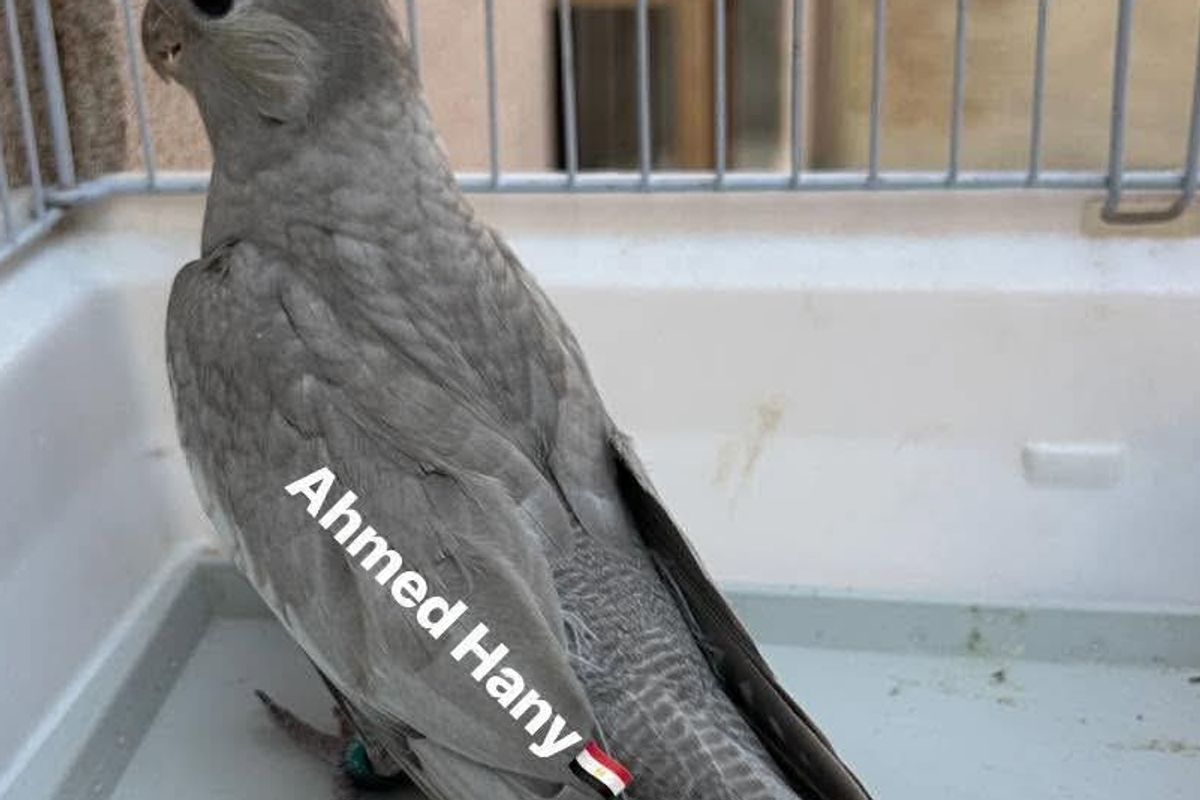
Bird (Ahmed Hany) Egypt