
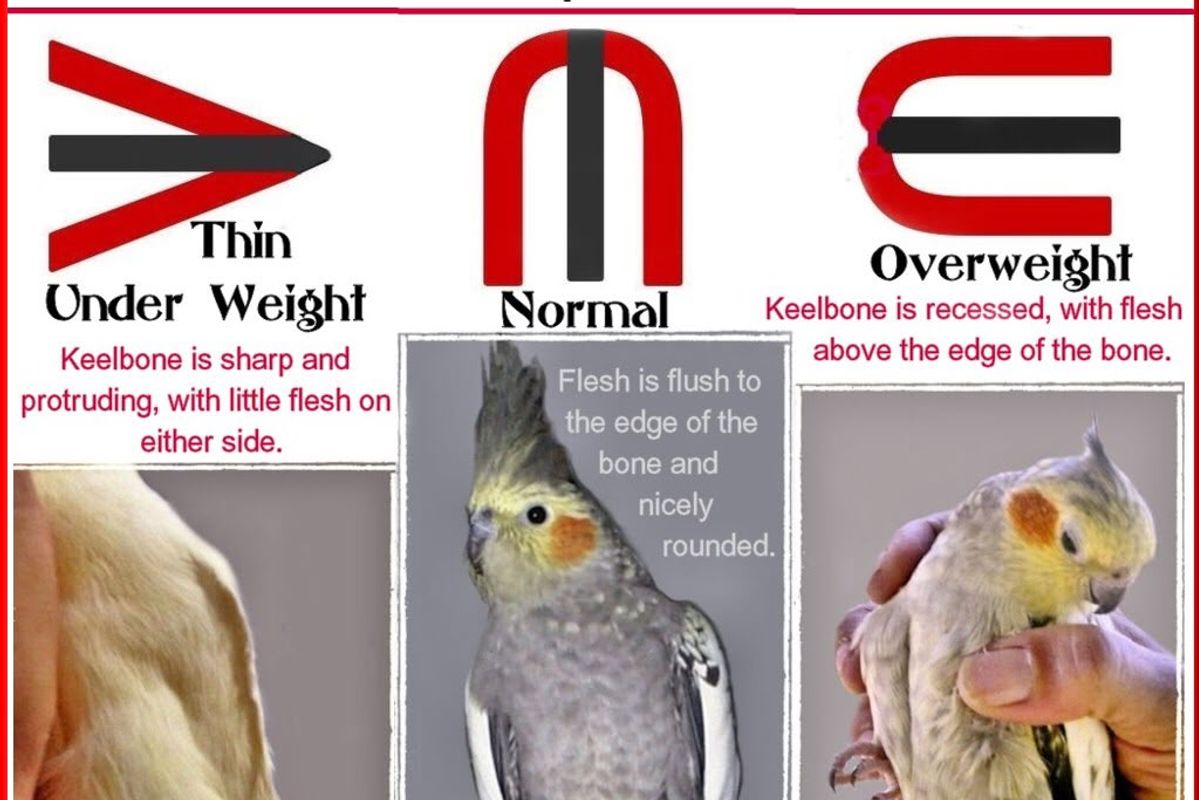
THE KEEL BONE IN COCKATIELS
THE KEEL BONE IN COCKATIELS
Have you ever checked your bird’s chest? That’s called a “keel check.”
The keel is the central breastbone where all flight muscles attach. By feeling it, we can easily tell what condition our cockatiel is in.
What the Keel Bone Reveals:
*1. Ideal Body Condition*
The keel feels like a smooth, slightly raised ridge. There should be firm, even muscle on both sides.
*2. Underweight / Emaciated*
The keel feels sharp, very prominent, and almost like a knife edge. This usually means muscle loss due to sickness or poor nutrition.
*3. Overweight / Obese*
The keel is difficult to feel because it’s buried under a thick layer of fat and soft tissue.
Common Problems & Injuries:
*1. Injury / Trauma*
In lean birds the keel sits just under the skin with little fat protection. A hard fall or flying into a wall can cause bad bruising, torn skin, or even a fracture.
*2. Metabolic Bone Disease - MBD*
Deficiency of Calcium or Vitamin D3 can make the keel bone soft, bent, or deformed.
*3. Feather Plucking & Wounds*
Stressed cockatiels may over-preen or self-mutilate around the chest. This can leave bare skin or open sores over the keel, which can easily get infected.
Why It Matters:
Doing this quick keel check regularly helps us track a cockatiel’s health and adjust their diet and care before problems get serious.
*Tip:* Check the keel once a week.
Zee Aviary