
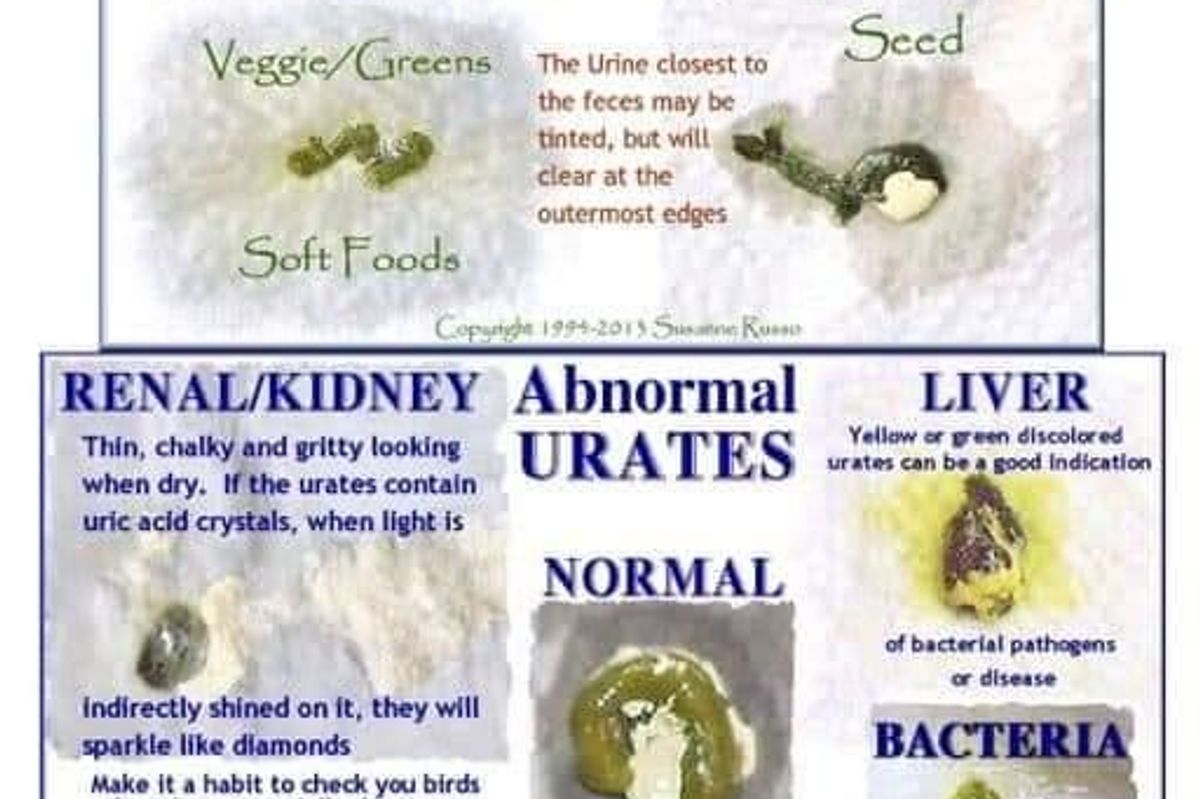
Droppings-ology ”Poop-ology”
Droppings-ology
”Poop-ology”:
What Your Bird’s Droppings Are Telling You
Birds can get sick very quickly. But the idea that they die “suddenly” without any warning isn’t true. The signs are always there, we just have to learn how to read them.
*The first sign of illness is often a change in droppings.*
That’s why you need to know what normal looks like, so you can spot changes in color, shape, smell, and amount right away.
Line the Cage With Paper
Put plain paper or newspaper at the bottom of the cage. This way droppings land on a clean, flat surface and you can see them clearly.
Using wood shavings just to make the cage look tidy and avoid daily cleaning will make you miss early health problems. A clean-looking cage isn’t worth it if you can’t monitor your bird’s health.
A Healthy Dropping Has 3 Parts:
1. Urine
*Urates* = the white, chalky part
*Urine* = the clear, liquid part
Sometimes they blend and look milky.
Watch for these changes:
- *Green or Yellow Urates* = Liver problems or loss of appetite
- *Brown or Chocolate Urates* = Possible lead toxicity
- *Red Urine or Urates* = Internal bleeding
- *Extra Urates* = Dehydration
- *Extra Urine/Water* = Illness, watery foods, or increased drinking
2. Feces
This is the solid part from the colon. The color depends on what your bird ate.
*Examples:*
Red pellets or strawberries = red droppings
Seeds + greens = green droppings
Blueberries = black droppings
This only applies to the solid part, not the urine.
*Normal texture:* Solid and tube-shaped, like a tiny worm. Coiled, straight, or broken is all normal.
*What is NOT diarrhea:*
Diarrhea isn’t just more water in the dropping. It’s when the solid part loses its shape and turns mushy like pudding.
*Check for blood:*
If the dropping is fresh, black, and tarry, and you didn’t feed berries, that’s *melena*. It means bleeding in the upper digestive tract. By the time blood moves through the gut, it turns black.
Any unusual color that can’t be explained by food should be checked by an avian vet. Also look for parasites like tapeworms or roundworms
Emergency Rule
If you see *black droppings* that suggest internal bleeding, go to the vet immediately.
Don’t wait until your bird is weak, fluffed up, and not eating — by then you’re running out of time.
*Daily habit:* Check your bird’s droppings every day and learn what’s normal for them.
When you see a change, note which part changed. If you can’t explain it with diet, call your avian vet right away.
Small changes in poop can save a life.
Zee Aviary | http://www.zeeaviary.com
Daily droppings check = daily health check
Courtesy: Sussane Russo