
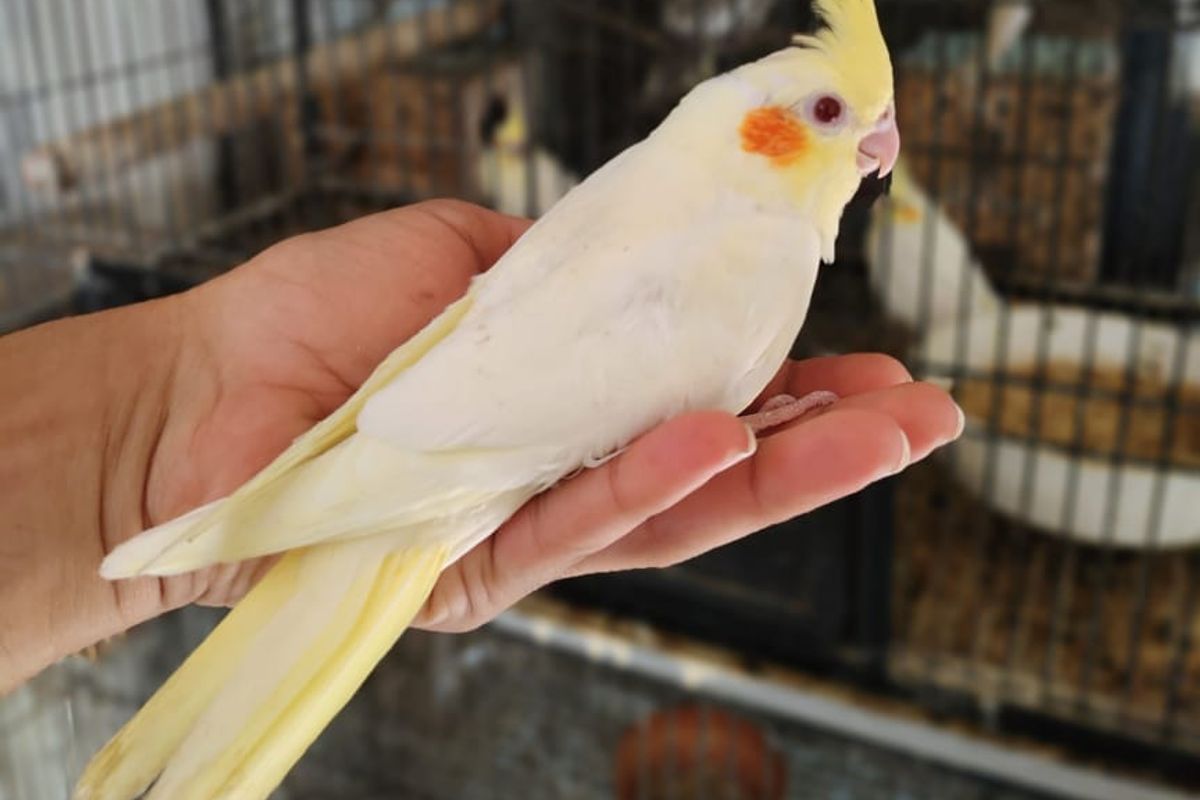
Designing the Ideal Cockatiel Breeding Setup
*Designing the Ideal Cockatiel Breeding Setup*
*From Cage Design to Nest Box, Perches, Hygiene and Bird Welfare*
Successful cockatiel breeding is not only about pairing a healthy male and female and providing a nest box. The setup in which birds live can influence their comfort, behaviour, breeding performance and overall welfare.
A good breeding setup should therefore be designed for two purposes: successful breeding and a good quality of life for the birds.
*1. Choosing the Right Breeding Cage*
A breeding cage should provide enough usable space for the pair to move, exercise, feed, drink and comfortably access the nest box.
For a pair of cockatiels, a practical cage can start around 90 × 60 × 60 cm (36 × 24 × 24 inches), with larger cages being preferable where space allows. Horizontal space is particularly useful because it allows the birds to move and exercise naturally.
The cage should be:
- Strong and made from bird-safe material
- Free from sharp edges
- Designed with safe bar spacing
- Easy to clean
- Equipped with a removable tray
- Large enough to accommodate perches, food, water and a nest box without becoming overcrowded
The exact dimensions can vary with cage design and management, but the principle is simple: provide adequate usable space rather than focusing only on minimum measurements.
*2. Designing the Nest Box*
The nest box should provide the breeding pair with a secure, dark and relatively quiet place to lay eggs and raise chicks.
A practical cockatiel nest box may be around 25–30 cm in height and 20–25 cm in width and depth, although different successful designs may use somewhat different dimensions.
A good nest box should have:
- Strong, bird-safe wooden construction
- A suitable entrance opening
- Secure attachment to the cage
- An inspection/cleaning opening where possible
- Safe internal surfaces
- Protection from direct sunlight and excessive heat
The box should remain stable when the birds enter and leave.
*3. Nesting Material*
The nesting area should provide a clean, dry and safe surface for eggs and chicks.
A suitable, clean and low-dust wood-based nesting material can be used. It should be dry and free from mould, chemicals and excessive dust.
The nest should be inspected when necessary, but unnecessary disturbance should be avoided, especially during incubation and the early days after hatching.
The aim is simple:
Clean, dry, safe and comfortable.
*4. Entrance and Inner Grip*
In a deeper or vertical nest box, an internal grip strip or ladder below the entrance can be useful.
It gives the parent birds a secure surface to grip while entering and leaving the box and can make movement easier.
The grip should be firmly attached, safe for the feet and free from sharp edges or loose wires.
Small design details like this matter because good breeding equipment should be designed around how the bird actually uses it.
*5. Perch Stability and Successful Mating*
Perches are not simply places for birds to sit. During breeding, perch stability becomes especially important.
The breeding pair needs a firm and comfortable footing during mating. If a perch is unstable, moves excessively or does not provide adequate grip, the birds may have difficulty maintaining a proper mating position. Repeated unsuccessful or incomplete mating can affect the chances of successful fertilization.
Therefore, breeding perches should be:
- Firmly fixed and free from excessive movement
- Made from bird-safe material
- Comfortable for the birds’ feet
- Positioned to provide easy access to the nest box
- Strong enough to support the birds during mating
Natural wooden perches with suitable variation in diameter can also provide useful foot exercise.
Stable perches support comfortable mating, and comfortable mating supports better breeding performance.
*6. Hygiene and Pre-Breeding Cleaning*
Cleanliness should not begin when the breeding season starts. Hygiene should be maintained throughout the year, with regular cleaning of cages, trays, feeding pots and drinking containers.
However, before starting a breeding cycle, the entire breeding area should receive a thorough cleaning.
This should include not only the cages but the whole setup:
- Cage floors and trays
- Nest boxes
- Food and water containers
- Cage stands and wheels
- Fans and other equipment around the aviary
- Corners, shelves and surrounding surfaces
- Dust and accumulated droppings in less visible areas
Breeding season increases the importance of hygiene because eggs and young chicks are particularly vulnerable to poor environmental conditions. Organic waste and contaminated surfaces can support the persistence and spread of infectious organisms.
The goal is not to make the aviary look clean for a day. The goal is to maintain a consistently clean and hygienic environment throughout the breeding cycle.
Good hygiene is therefore not a one-time activity—it is part of responsible bird management.
*7. Cage Placement and Environment*
Even a well-designed cage can become a poor breeding environment if it is placed incorrectly.
The breeding setup should ideally be away from constant noise, unnecessary disturbance and excessive human traffic. Birds should receive adequate daylight and fresh air without being exposed to excessive direct sunlight, extreme heat or strong drafts.
The objective is to create an environment where the pair feels secure, comfortable and undisturbed.
*8. A Breeding Cage Is a Production Unit for Us—but a Home for Them*
This is perhaps the most important principle of responsible breeding.
For a breeder, a breeding cage may be a production unit where eggs and chicks are produced. But for the birds, that same cage is their *home* .
Many captive cockatiels are born in cages and may spend most, or even all, of their lives in captivity. This is the environment where they eat, sleep, rest, interact with their mate, raise their young and spend their daily lives.
So we should not design a cage by asking only:
“How many birds can I fit inside it?”
We should also ask:
“If this were their home, would it provide them with a safe and comfortable life?”
That means providing adequate space, stable perches, clean water, suitable food, privacy, good ventilation, appropriate temperature, a secure nesting area and opportunities for normal movement and behaviour.
Breeding should never come at the expense of the bird’s welfare. A weak, sick or injured bird should not be bred simply to increase production, and females should not be pushed into continuous breeding without adequate recovery.
*9. Quality Over Quantity*
(Birds h, Machine ni)
A successful breeding program should not be measured only by the number of eggs or chicks produced.
A better goal is:
Healthy parents → suitable home → good nutrition → healthy eggs → successful hatching → strong chicks → proper growth.
Responsible breeding means producing healthy, well-developed birds while protecting the health, comfort and welfare of the breeding pair.
*Conclusion:-*
An effective cockatiel breeding setup is a combination of proper cage design, a suitable nest box, stable perches, good hygiene, clean water, adequate ventilation and bird welfare.
The exact dimensions may vary according to the design and available space, but the basic principle remains the same: the setup should work for the birds, not merely for the breeder.
For us, the breeding cage may be a production unit.
For the birds, it is their home.
And when we design that home with care, we are not only improving our breeding setup—we are becoming more responsible breeders.
Ahmad Abdullah
Multan, Pakistan 🇵🇰