
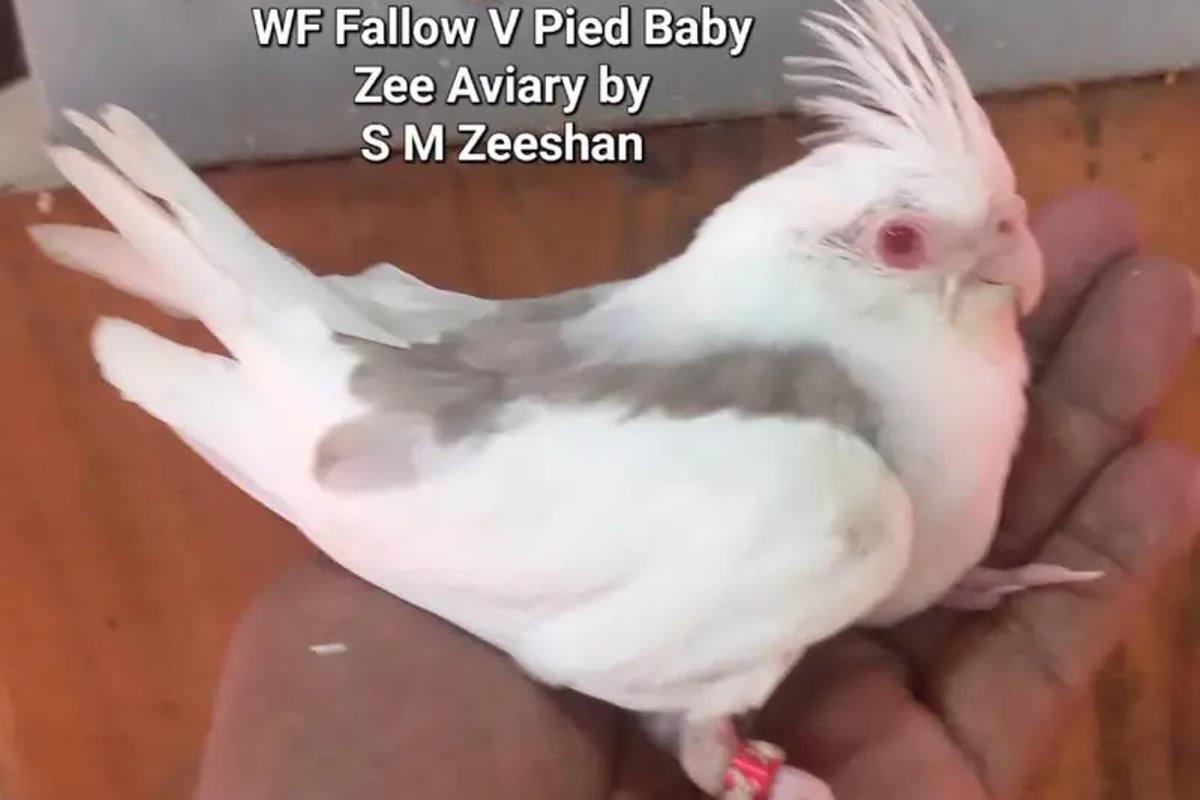
Cockatiels: Socialization and tameness:
Socialization and tameness: Regular handling during feeding makes chicks imprint on humans, producing very tame, cuddly birds that tolerate handling, training, and flight harnesses more readily.
Predictable nutrition and growth: Hand‑feeding with a formulated crop‑safe diet ensures consistent calorie and nutrient intake, reducing the risk of underfeeding when parent birds are inexperienced, stressed, or in poor condition.
Control of temperature and hygiene: Hand‑feeding enables close monitoring of crop temperature, feeding technique, and hygiene to prevent crop infections or yeast that can occur with messy nests.
Salvage or emergency care: Orphaned chicks, rejected clutches, or parents who damage eggs/chicks require hand‑feeding to survive.
Selective breeding programs: Breeders may intervene to rear valuable or genetically important chicks when parent birds are unrelated, aggressive, or likely to harm chicks.
Faster growth to sale/placement: Some breeders raise birds to weaning and basic handling sooner for sale, showing, or placement in homes.
Reasons people let parents raise their chicks
Natural behavior and imprinting on species: Parent‑raised chicks develop normal species‑typical behavior, vocalizations, and social interactions with conspecifics; this can reduce some behavioral issues tied to human imprinting (e.g., over‑dependence).
Lower labor and cost: Parent rearing requires less time, equipment, and formula than multiple daily hand‑feeding sessions across weeks.
Breeder confidence in parent competence: Experienced parent pairs typically feed and keep chicks warm, hydrated, and properly fed; intervention isn’t necessary if parents are healthy and calm.
Reduced human imprint problems: Birds raised by parents often remain more independent and less likely to develop demanding or overly clingy behaviors toward humans.
Avoidance of feeding errors: Hand‑feeding introduces risks (incorrect temperature, formula consistency, aspiration, crop infections) if done improperly; trusting competent parents avoids these technical hazards.
Practical trade‑offs and risk factors
Time and skill: Hand‑feeding requires 4–6+ feeds daily for several weeks, knowledge of formula preparation, correct crop management, and sanitation. Mistakes can be fatal. Parent rearing requires monitoring but far less hands‑on time.
Temperament: Hand‑fed birds are usually friendlier with people; parent‑reared birds are often calmer with other birds. Choice depends on whether the final bird will be kept primarily as a companion or a breeding/aviary bird.
Health risks: Both methods carry risks—parent neglect, siblicide, or malnutrition vs. aspiration, crop burn/yeast, or formula contamination. Good husbandry and prompt intervention when problems appear mitigate risks.
Hybrid approaches: Common compromise—allow parents to rear until a sign of trouble appears, then hand‑feed selectively; or briefly handle chicks during parent‑rearing to habituate to people without full imprinting.
Guidelines for deciding
Assess parent quality: age, experience, temperament, and health. Experienced, calm parents usually succeed.
Consider end goal: companion bird that must be tame favors hand‑feeding; aviculture or breeding stock often favors parent rearing.
Evaluate resources: time for frequent feeds, ability to follow sanitary technique, and willingness to accept higher immediate labor.
Monitor closely: whether hand‑feeding or not, watch chick weight gain, crop function, and parental behavior; intervene if growth falters or parents are aggressive.
Examples (typical scenarios)
A first‑time owner with a single pair wanting a loving pet often hand‑feeds a chick to guarantee tameness.
An experienced breeder running an aviary with many pairs commonly lets parents rear chicks to maintain natural behaviors and reduce labor; they’ll step in only for at‑risk chicks.
A rejected or orphaned chick is routinely hand‑fed until weaned.
Bottom line
Hand‑feeding trades labor and some health risks for human‑bonded, tame birds and predictable nutrition; parent rearing trades convenience and natural behavior for less tameness but fewer technical feeding hazards. Choose based on parental competence, intended purpose of the bird, available time and skill, and readiness to intervene when problems arise.