COCKATIELS IN PAKISTAN
COCKATIEL IN PAKISTAN
Introduction
Cockatiels are among the most popular pet and breeding birds in Pakistan. Their beautiful crest, orange cheek patches, gentle personality, and wide range of mutations make them attractive to both beginners and experienced breeders.
Popular Cockatiel Mutations in Pakistan
• Grey
• Lutino
• Pearl
• Opaline
• Pied
• Cinnamon
• Whiteface
• Fallow
• Various mutation combinations
A bird's mutation alone does not determine its quality or value. Health, feather condition, age, sex, taming, genetics, and breeding history are also important.
Pet Cockatiel vs. Breeding Cockatiel
For a pet, tameness, confidence, and interaction with people are important.
For breeding, prioritize:
• Good health and body condition
• Correctly identified sex
• Suitable breeding age
• Compatible pair
• Good feather quality
• Balanced nutrition
• Known genetic background
• Reliable breeding history, where available
Diet and Nutrition
A seed-only diet is not ideal. Cockatiels benefit from a varied, balanced diet that can include quality seed mix, suitable formulated food or pellets, sprouts, vegetables, leafy greens, and limited fruit. Fresh, clean water should be available every day.
During breeding and chick-raising, nutritional needs can increase. Appropriate egg food and calcium-rich nutrition may be useful, but supplements should not be given blindly; unnecessary supplementation can be harmful.
Care in Pakistan's Climate
Pakistan's hot summers make ventilation and heat management especially important.
• Provide good airflow without exposing birds to harsh drafts.
• Provide shade from intense afternoon sunlight.
• Keep fresh drinking water available.
• Avoid overcrowding.
• Maintain good cage and aviary hygiene.
• Protect birds from sudden temperature changes in winter.
Breeding
Breeding should never be forced. A pair should be healthy, compatible, mature, well-fed, and provided with a suitable environment.
A simple breeding formula:
Healthy Pair → Bonding → Good Nutrition → Suitable Nest Box → Privacy → Patience
Nest Box
Place the nest box securely in a suitable, relatively high position. Avoid unnecessary disturbance. Hygiene and a safe setup are more important than excessive nesting material.
Eggs and Chicks
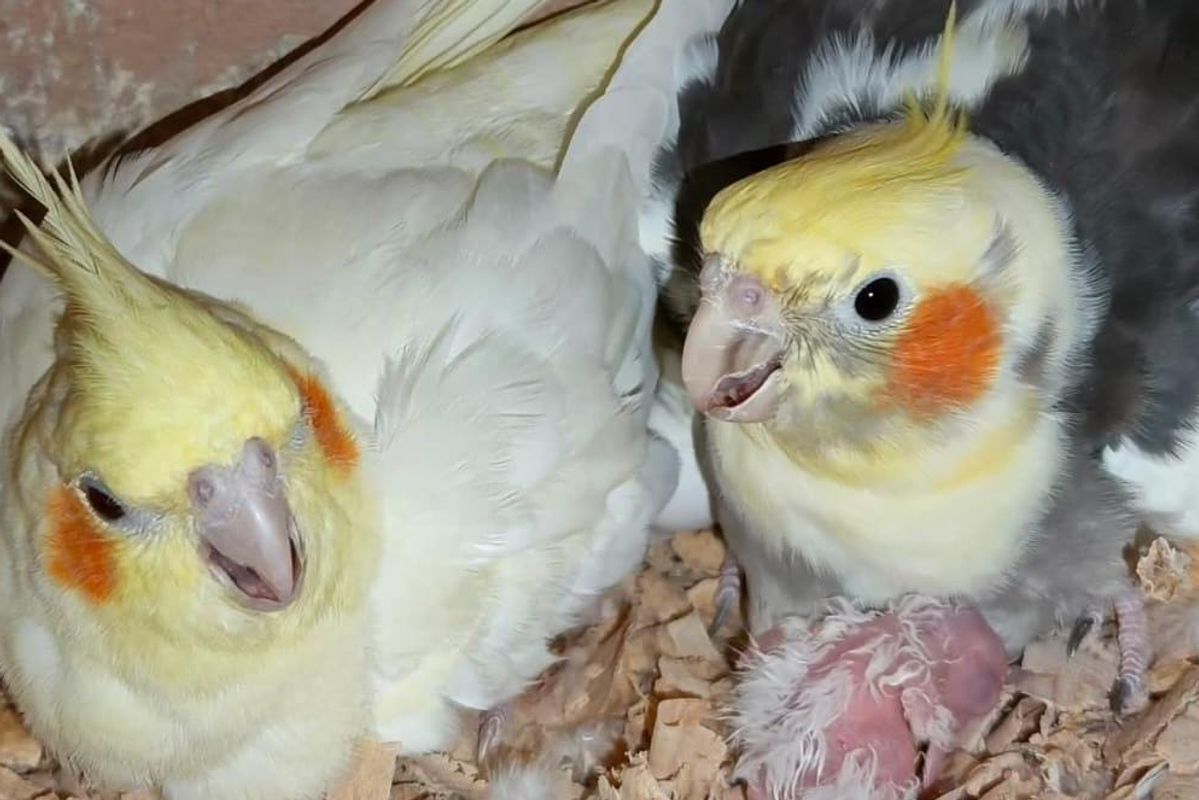
A typical clutch may contain several eggs. Incubation is generally around 18–20 days, and chicks usually begin leaving the nest at around five weeks, although individual pairs vary.
Some pairs may fail to incubate eggs properly, damage eggs, or fail to feed chicks, especially during early breeding attempts. Patience and close observation are important.
Avoiding Overbreeding
Female cockatiels should not be kept in continuous breeding cycles. Proper rest between breeding periods is important for recovery and long-term health. If a female becomes weak or repeatedly develops egg-related problems, stop breeding and seek avian veterinary advice.
Advice for Pakistani Breeders
Do not focus only on the question, “What mutation is this?”
Good breeding depends on:
Genetics + Health + Nutrition + Hygiene + Pair Compatibility + Patience
Keep records of:
• Hatch date
• Parents
• Mutation
• Sex when reliably determined
• Identification/ring information
• Breeding history
How Cockatiel Price Is Determined in Pakistan
Prices are not fixed. They can vary according to:
Mutation + Age + Sex + Health + Taming + Feather Quality + Breeding Status + City + Seller Reputation
A healthy, well-raised tame bird can be priced differently from an ordinary untamed bird. A proven breeding pair should also be evaluated differently from individual birds.
Conclusion
A cockatiel is not only a beautiful bird—it is a responsibility. Whether kept as a pet or for breeding, prioritize health, welfare, proper nutrition, responsible breeding, and quality genetics over quantity.
Healthy Birds → Healthy Chicks → Successful Breeding → A Strong Aviary
Al-Wahab Aviary, Pakistan
Quality Birds • Responsible Breeding • Bird Care